
What are Case-based passages?
Case-based passages are detailed, factual readings that describe a real-world scenario, study, or report on a particular topic. Unlike fictional or literary writing, they rely mainly on facts, data, and visual data tools like graphs, charts, and tables to present information clearly.
*Affiliate link. As an Amazon Associate, this website earns from qualifying purchases.*
📚Top Pick for Toppers & Teachers!
Organize your study notes with the Pilot Hi-Tecpoint V5 Multi-Color Pens Package on Amazon.
Tips and Techniques
Here are simple techniques students can use to handle case-based passages effectively:
- Read the questions first
Skim the questions before reading the passage. This tells you what to look for, so you don’t waste time re-reading later. - Skim first, then read closely
Do a quick first pass to get the overall idea — topic, purpose, and structure. Then go back and read carefully for details. - Focus on data and numbers
Pay close attention to any graphs, tables, charts, or statistics. Questions often test whether you can read and interpret this data correctly. - Underline or note key facts
Mark important names, dates, numbers, causes, and results as you read. This makes it easy to find them again when answering questions. - Break the passage into parts
Mentally divide it into sections (background, method, findings, conclusion). This helps you locate information faster. - Answer directly from the text
Don’t rely on outside knowledge or assumptions — base your answers only on what the passage states or shows. - Watch for cause-and-effect and comparisons
Many case-based questions ask about relationships between facts (what caused what, or how two things compare), so note these connections while reading. - Manage your time
Don’t spend too long on one passage. Set a time limit, answer what you can confidently, and move on if stuck. - Practise with real data passages
Regularly practising with reports, case studies, or articles containing graphs and statistics builds comfort and speed over time.
Passage 1: Traditional Water Management
Traditional water management systems in India were designed to suit local environmental conditions and community needs. Structures such as johads in Rajasthan, stepwells in Gujarat, and tank systems in South India were used to store rainwater and recharge groundwater. These systems required minimal external resources and were maintained collectively by local communities.
In recent years, these practices have been reintroduced in regions facing water shortages. Schools and local organisations have supported this effort by involving students in activities such as cleaning stepwells and restoring water channels. Such participation has improved awareness and encouraged sustainable habits.
Modern tools are now being used alongside these traditional systems. Data related to rainfall and groundwater levels helps communities plan water use more efficiently. However, the effectiveness of these methods depends on regular maintenance and consistent participation.
Observations from different regions show that areas with higher community involvement experience greater improvement in water availability. This indicates that traditional knowledge remains effective, but its success depends on how actively it is applied.
Case Study Data: Impact of Traditional Water Systems on Groundwater Levels
| Region | Method Used | Participation Level | Water Level Before (m) | Water Level After (m) |
| Rajasthan | Johads | High | 3.2 | 6.8 |
| Gujarat | Stepwells | Moderate | 4.5 | 6.2 |
| Tamil Nadu | Tank System | Low | 3.8 | 4.6 |
Section A: Advanced Analytical Questions (R1) – With Answers
Q1. (MCQ – 1 mark)
The effectiveness of traditional systems, as presented in the passage, is best understood as:
a) independent of human involvement
b) dependent on consistent community participation
c) limited to specific regions only
d) controlled by technological tools
Answer: b) dependent on consistent community participation
Q2. (MCQ – 1 mark)
A comparison of the regions indicates that the variation in water level improvement is primarily linked to:
a) initial water levels
b) type of structure used
c) degree of participation
d) rainfall differences
Answer: c) degree of participation
Q3. (Short Answer – 2 marks)
Tamil Nadu records the lowest improvement despite using a traditional system.
Account for this outcome by integrating evidence from both the passage and the table.
Answer: Tamil Nadu has low community participation, and the passage states that effectiveness depends on consistent involvement. This results in only a small increase in water levels.
Q4. (2 marks)
Complete the statement with relevant textual support:
“These systems continue to be effective in present conditions because ________.”
Answer: They are supported by modern tools and can be maintained through community participation, making them practical and sustainable.
Q5. (2 marks)
The passage moves from describing knowledge to emphasising its application.
Trace how this shift is developed.
Answer: The passage first explains traditional water systems and their design, then shows how they are being actively restored and used by communities and students, highlighting that practical application is necessary for effectiveness.
Q6. (Vocabulary – 1+1 = 2 marks)
Choose the correct meanings of the words as used in the passage:
i) Recharge
a) Empty
b) Refill naturally
c) Break
d) Remove
Answer: b) Refill naturally
ii) Consistent
a) Irregular
b) Steady and continuous
c) Sudden
d) Temporary
Answer: b) Steady and continuous
Section B: Functional Level Questions (R2) – With Answers
Q1. (MCQ – 1 mark)
The passage highlights the role of community effort in improving water systems.
Select the option that best reflects this idea:
a) Traditional systems work without people
b) Participation leads to better results
c) Technology replaces traditional methods
d) Water problems remain unchanged
Answer: b) Participation leads to better results
Q2. (MCQ – 1 mark)
From the table, Rajasthan shows the highest increase in water level.
This is most closely associated with:
a) low starting level
b) high participation
c) type of method
d) rainfall conditions
Answer: b) high participation
Q3. (Short Answer – 2 marks)
Students are involved in restoring water systems.
State one action they perform.
Answer:
They clean stepwells or restore water channels.
Q4. (Short Answer – 2 marks)
Traditional systems are widely used in different regions.
State one reason for their suitability.
Answer: They are designed according to local environmental conditions and require minimal resources.
Q5. (2 marks)
A village plans to improve water availability using traditional methods.
Suggest one step it should take to ensure better results.
Answer: It should ensure active and consistent community participation in maintaining the system.
Q6. (Vocabulary – 1+1 = 2 marks)
i) Find the word that means same as Outcome
a) Cause
b) Result
c) Problem
d) Process
Answer: b) Result
ii) What does the word Participation mean?
a) Ignoring
b) Taking part
c) Avoiding
d) Observing
Answer: b) Taking part
Passage 2: Local Crafts & Entrepreneurship
In recent years, vocational education in India has increasingly focused on promoting local crafts and entrepreneurship among students. This approach aims to equip learners with practical skills that can generate income and support sustainable livelihoods. Traditional crafts such as pottery, weaving, and handicrafts are now being integrated into school activities, allowing students to understand both the creative and economic aspects of these skills.
Schools and training programmes are also introducing basic financial literacy, helping students learn how to calculate costs, set prices, and manage earnings. By engaging in small-scale production and sales, learners gain firsthand experience of how local businesses operate. This not only enhances their confidence but also encourages innovation and self-reliance.
In many regions, students collaborate with local artisans to learn techniques and understand market demand. These interactions highlight the importance of quality, pricing, and customer preferences in sustaining a business. At the same time, the use of eco-friendly materials ensures that such initiatives remain environmentally responsible.
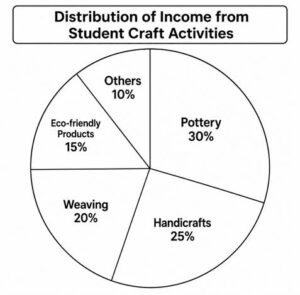
Data collected from student-led craft projects shows how income is distributed across different activities. The variation reflects differences in demand, skill level, and pricing strategies. Overall, vocational learning is helping students connect education with real-world opportunities while preserving cultural heritage.
Section A: Advanced Analytical Questions (R1) – With Answers
Q1. (MCQ – 1 mark)
The vocational approach described in the passage is best understood as:
a) focused only on traditional learning
b) combining skill development with economic understanding
c) limited to classroom-based activities
d) unrelated to real-world needs
Answer: b) combining skill development with economic understanding
Q2. (MCQ – 1 mark)
A comparison of the income distribution suggests that:
a) all activities generate equal income
b) demand and pricing influence earnings across activities
c) eco-friendly products generate the highest income
d) weaving is the least significant activity
Answer: b) demand and pricing influence earnings across activities
Q3. (Short Answer – 2 marks)
Eco-friendly products account for a smaller share compared to pottery.
Analyse ONE possible reason using ideas from the passage.
Answer : Income from activities varies due to differences in demand, skill level, and pricing strategies, which explains the lower share of eco-friendly products compared to pottery.
Q4. (2 marks)
Complete the statement using evidence:
“Financial literacy supports vocational learning because ________.”
Answer: it helps students calculate costs, set prices, and manage earnings effectively.
Q5. ( 2 marks)
The passage highlights a shift from learning skills to building livelihoods.
Explain how this shift is developed.
Answer: The passage shows that students not only learn crafts but also engage in production, pricing, and selling, linking skills to income generation and entrepreneurship.
Q6. (Vocabulary – 1+1 = 2 marks)
Choose the correct meanings of the words as used in the passage:
i) Livelihoods
a) Hobbies
b) Means of earning a living
c) Expenses
d) Products
Answer: b) Means of earning a living
ii) Sustainable
a) Temporary
b) Harmful
c) Able to continue over time
d) Expensive
Answer: c) Able to continue over time
Section B: Functional Level Questions (R2) – With Answers
Q1. (MCQ – 1 mark)
The passage shows that vocational learning helps students:
a) avoid practical work
b) connect learning with real-life skills
c) focus only on theory
d) ignore traditional crafts
Answer: b) connect learning with real-life skills
Q2. (MCQ – 1 mark)
From the pie chart, pottery contributes the highest income.
This suggests that:
a) it is less popular
b) it has higher demand or better pricing
c) it requires no skill
d) it is newly introduced
Answer: b) it has higher demand or better pricing
Q3. (Short Answer – 2 marks)
Students work with local artisans.
State ONE benefit of this interaction.
Answer: They learn practical techniques and understand market demand.
Q4. (Short Answer – 2 marks)
Why is financial literacy important in vocational education?
Answer: It helps students manage costs, set prices, and handle earnings properly.
Q5. ( 2 marks)
A student wants to start a small craft business.
Suggest ONE step based on the passage.
Answer: The student should calculate costs and set prices properly, as learned through financial literacy.
Q6. (Vocabulary – 1+1 = 2 marks)
Choose the correct meanings of the words as used in the passage:
i) Income
a) Loss
b) Earnings
c) Expense
d) Product
Answer: b) Earnings
ii) Demand
a) Supply
b) Need or desire for a product
c) Cost
d) Production
Answer: b) Need or desire for a product
Passage 3: Urban Forests and Community Participation
Read the following passage carefully.
1. In recent years, several Indian cities have started developing urban forests to improve environmental conditions and create healthier public spaces. Urban forests are areas within cities where trees and native plants are grown to support biodiversity, reduce pollution, and improve air quality. These green spaces also help lower temperatures and absorb rainwater in densely populated urban regions.
2. Schools, resident groups, and local organisations are increasingly participating in plantation drives and awareness campaigns connected to urban forests. Students are encouraged to identify native species, observe plant growth, and understand how green spaces help maintain ecological balance. Experts believe that involving young people in such activities strengthens environmental awareness and encourages community responsibility.
3. A recent survey conducted in selected Indian cities studied the impact of urban forests on local environmental conditions. The findings showed that cities with larger increases in green cover experienced greater reduction in summer temperatures. Researchers also observed that long-term success depended on regular maintenance and active public participation.
4. Environmentalists emphasise that urban forests contribute not only to environmental protection but also to public well-being. Access to green spaces has been associated with reduced stress levels and healthier lifestyles. As Indian cities continue to expand, many experts now consider urban forests essential for building sustainable and liveable communities.
Data: Impact of Urban Forests in Selected Indian Cities
| City | Increase in Green Cover (%) | Reduction in Average Summer Temperature |
| Pune | 18% | 2.5°C |
| Hyderabad | 22% | 3°C |
| Jaipur | 12% | 1.5°C |
| Bengaluru | 25% | 3.5°C |
Section A: Advanced Analytical Questions (R1) – With Answers
swers – 10 MARKS
Q1. (1 mark)
Which statement best reflects the central idea developed across the passage?
a) Urban forests are mainly decorative additions to cities
b) Environmental protection depends entirely on government action
c) Urban forests contribute to both ecological balance and public well-being
d) Plantation drives are effective only in smaller cities
Answer: c) Urban forests contribute to both ecological balance and public well-being
Q2. (1 mark)
The data provided in the table most strongly supports which conclusion?
a) Reduction in temperature is unrelated to green cover
b) Cities with greater increase in green cover generally experienced greater temperature reduction
c) Jaipur achieved the most balanced environmental improvement
d) Public participation affects only plantation drives
Answer: b) Cities with greater increase in green cover generally experienced greater temperature reduction
Q3. (1 mark)
Select the observation that can be inferred from paragraph 2.
a) Student involvement is limited to classroom activities
b) Environmental awareness develops through active participation
c) Urban forests require advanced technological support
d) Ecological balance can be maintained without community effort
Answer: b) Environmental awareness develops through active participation
Q4. (2 marks)
The passage emphasises that plantation alone is insufficient for long-term environmental improvement.
Explain how the passage develops this idea.
Answer: The passage explains that simply planting trees is not enough to ensure environmental improvement. It highlights that urban forests become successful only when they are supported through regular maintenance and active public participation. The author also connects student and community involvement with long-term sustainability, showing that continuous effort is necessary for lasting environmental impact.
Q5. (2 marks)
How does the table reinforce the environmental argument presented in the passage?
Answer: The table shows that cities with higher increases in green cover also recorded greater reduction in summer temperatures. This supports the environmental argument that urban forests help improve environmental conditions in cities.
Q6. (1 mark)
Which of the following, if true, would weaken the argument presented in the passage?
a) Cities with increased green cover recorded lower pollution levels
b) Residents actively participated in plantation drives
c) Areas with large urban forests showed no environmental improvement
d) Students monitored the growth of native species
Answer: c) Areas with large urban forests showed no environmental improvement
Q7. (1 mark)
The word ‘ecological’ as used in the passage refers to something connected with:
a) trade and commerce
b) environmental systems
c) transport networks
d) public administration
Answer: b) environmental systems
Q8. (1 mark)
Select the option that best conveys the meaning of ‘maintenance’ in the context of the passage.
a) decoration and beautification
b) regular care and upkeep
c) expansion of urban spaces
d) removal of damaged plants
Answer: b) regular care and upkeep
Section B: Functional Level Questions (R2) – With Answers
Q1. (1 mark)
The main purpose of urban forests is to:
a) increase commercial activity
b) improve environmental conditions in cities
c) reduce the number of public spaces
d) replace residential areas
Answer: b) improve environmental conditions in cities
Q2. (1 mark)
According to the table, which city recorded the highest reduction in average summer temperature?
a) Pune
b) Hyderabad
c) Jaipur
d) Bengaluru
Answer: d) Bengaluru
Q3. (1 mark)
Which activity mentioned in the passage involves student participation?
a) Road construction
b) Plantation drives
c) Industrial production
d) Traffic management
Answer: b) Plantation drives
Q4. (2 marks)
The passage highlights the role of community participation in urban forest projects.
State two ways in which people contribute to such projects.
Answer: People contribute by taking part in plantation drives and supporting the regular maintenance of green spaces. These efforts help urban forest projects remain effective and sustainable over time.
Q5. (2 marks)
A city plans to increase its green cover through urban forests.
Based on the passage and the table, explain one likely environmental benefit.
Answer: The city may experience lower summer temperatures and improved environmental conditions due to increased green cover. The table also shows that cities with higher green cover recorded greater reduction in temperature.
Q6. (1 mark)
What does the table suggest about Jaipur compared to Bengaluru?
a) Jaipur added more green cover
b) Jaipur showed greater temperature reduction
c) Jaipur recorded lower green cover increase and lower temperature reduction
d) Jaipur had more public participation
Answer: c) Jaipur recorded lower green cover increase and lower temperature reduction
Q7. (1 mark)
Choose the correct meaning of the word ‘biodiversity’ as used in the passage.
a) road expansion
b) different forms of plant and animal life
c) industrial activity
d) population increase
Answer: b) different forms of plant and animal life
Q8. (1 mark)
Choose the correct meaning of the word ‘participation’ as used in the passage.
a) restriction
b) taking part in an activity
c) observation only
d) competition
Answer: b) taking part in an activity
Passage 4: Digital Habits and Student Well-Being
Read the following passage carefully.
1. Digital devices have become an important part of students’ daily lives. From online learning to communication and entertainment, technology now influences how young people study, interact, and spend their free time. While digital platforms provide quick access to information and learning resources, experts also warn that excessive screen time may affect concentration, sleep patterns, and emotional well-being.
2. Several schools across India have started awareness programmes to encourage balanced digital habits among students. Learners are being guided to manage screen time, avoid unnecessary distractions, and maintain healthy routines. Teachers believe that digital discipline is essential because technology itself is neither completely harmful nor entirely beneficial. Its impact depends largely on how responsibly it is used.
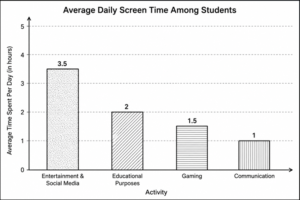
3. A recent survey conducted among secondary school students examined the average amount of time spent daily on different digital activities. The findings showed that educational use remained lower than entertainment-related screen time. Researchers observed that students who followed fixed digital schedules reported better focus and reduced stress levels compared to those with irregular usage patterns.
4. Health experts emphasise that balanced digital behaviour should include regular physical activity, face-to-face interaction, and proper sleep. They suggest that students should view technology as a useful tool rather than a constant source of engagement. As digital access continues to increase, responsible technology use is becoming an important life skill for young people.
Section A: Advanced Analytical Questions (R1) – With Answers
Q1. (1 mark)
Which statement best reflects the author’s viewpoint regarding technology use?
a) Technology should be avoided completely by students
b) Entertainment activities are more valuable than educational learning
c) The effect of technology depends on responsible usage
d) Digital platforms mainly reduce learning opportunities
Answer: c) The effect of technology depends on responsible usage
Q2. (1 mark)
The survey findings most strongly support which conclusion?
a) Educational use occupies the highest share of screen time
b) Students spend more time on entertainment than on educational activities
c) Gaming has completely replaced communication
d) Digital schedules increase overall screen time
Answer: b) Students spend more time on entertainment than on educational activities
Q3. (1 mark)
Select the observation that can be inferred from paragraph 3.
a) Fixed digital routines may positively affect student well-being
b) Entertainment activities should be banned in schools
c) Students prefer educational platforms over communication tools
d) Screen time has no connection with stress levels
Answer: a) Fixed digital routines may positively affect student well-being
Q4. (2 marks)
The passage describes technology as ‘neither completely harmful nor entirely beneficial’.
Explain how the author develops this idea across the passage.
Answer: The author explains that technology supports learning, communication, and access to information, but excessive or irresponsible use may affect concentration, sleep, and emotional well-being. This shows that its impact depends on how it is used.
Q5. (2 marks)
How does the data table reinforce the concerns discussed in the passage regarding digital habits?
Answer: The table shows that students spend more time on entertainment and social media than on educational purposes, supporting the concern that excessive non-academic screen time may affect healthy digital balance.
Q6. (1 mark)
Which of the following, if true, would weaken the argument presented in the passage?
a) Students following fixed schedules reported lower stress levels
b) Schools introduced awareness programmes on digital discipline
c) Increased entertainment screen time showed no impact on concentration or sleep
d) Experts recommended balanced technology use
Answer: c) Increased entertainment screen time showed no impact on concentration or sleep
Q7. (1 mark)
Choose the correct meaning of the word ‘discipline’ as used in the passage.
a) punishment
b) controlled and responsible behaviour
c) competition
d) academic pressure
Answer: b) controlled and responsible behaviour
Q8. (1 mark)
Choose the correct meaning of the word ‘irregular’ as used in the passage.
a) properly organised
b) unusual in colour
c) not following a fixed pattern
d) extremely fast
Answer: c) not following a fixed pattern
Section B: Functional Level Questions (R2) – With Answers
Q1. (1 mark)
The passage mainly encourages students to:
a) stop using digital devices completely
b) use technology in a balanced and responsible manner
c) spend more time on gaming activities
d) avoid communication platforms
Answer: b) use technology in a balanced and responsible manner
Q2. (1 mark)
According to the table, which activity takes the highest amount of screen time?
a) Communication
b) Gaming
c) Educational Purposes
d) Entertainment & Social Media
Answer: d) Entertainment & Social Media
Q3. (1 mark)
Which habit is recommended in the passage for healthy digital behaviour?
a) Increased gaming
b) Avoiding physical activity
c) Maintaining proper sleep
d) Using multiple devices together
Answer: c) Maintaining proper sleep
Q4. (2 marks)
State two problems that may result from excessive screen time according to the passage.
Answer: Excessive screen time may affect concentration and sleep patterns.
Q5. (2 marks)
A student spends most of the day on entertainment apps.
Based on the passage, explain one likely effect of this habit.
Answer: The student may experience reduced focus, stress, or unhealthy digital habits due to excessive entertainment-related screen time.
Q6. (1 mark)
What does the table suggest about educational use compared to entertainment use?
a) Educational use is higher
b) Both are equal
c) Entertainment use is higher
d) Educational use is not included in the survey
Answer: c) Entertainment use is higher
Q7. (1 mark)
Choose the correct meaning of the word ‘concentration’ as used in the passage.
a) ability to focus
b) entertainment activity
c) physical exercise
d) social interaction
Answer: a) ability to focus
Q8. (1 mark)
Choose the correct meaning of the word ‘engagement’ as used in the passage.
a) participation or involvement
b) punishment
c) separation
d) competition
Answer: a) participation or involvement
For official academic guidelines and updates, you can refer to CBSE Academic Website